

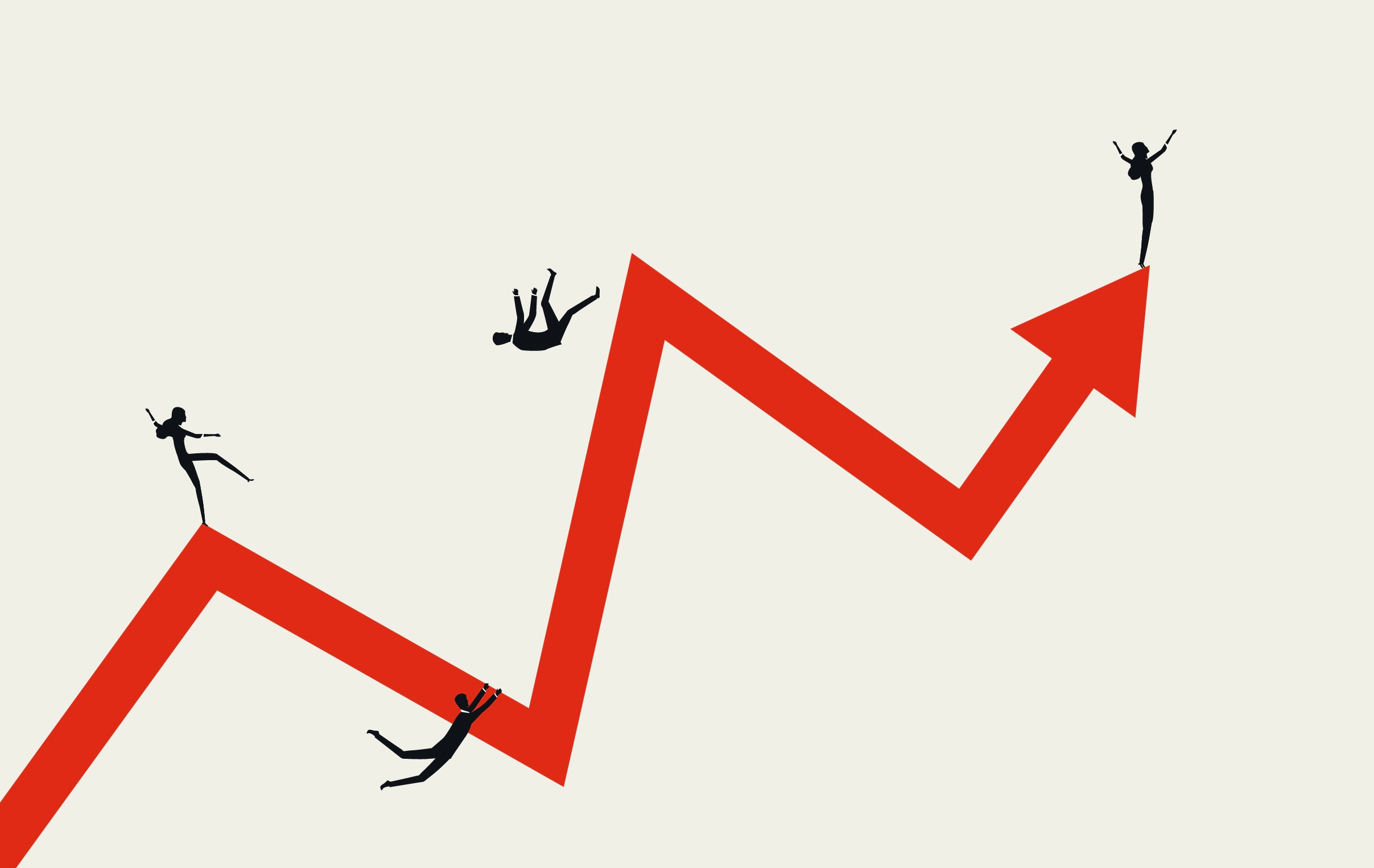
In what is known as the American Rust Belt, working-age adults are more likely to die young from what economists Anne Case and Angus Deaton refer to as deaths of despair: suicide, opioid abuse and alcoholism closely linked to the loss of purpose and community that tends to accompany economic displacement. Only former Soviet states transitioning from communism in the 1990s have experienced the level of social collapse that millions of Americans have suffered over the last few decades.
Yet, with the emergence of AI, we find ourselves once again on the brink of another economic disruption — one that threatens to displace workers at even greater speed and scale — and somehow almost no one seems to know what we’re going to do about it.
This was on full display back in April when New York Magazine asked five political insiders whether anyone in Congress has a plan for AI job losses. The responses were remarkably thin. Josh Hawley proposed better tracking of labor market data and lowering health care costs. Andrew Yang admitted politicians are asking him for answers beyond a universal basic income — but gave no indication of what those might be. And Bill Foster, the only PhD physicist in Congress, went as far as to suggest that we compensate people for making eye contact with each other.
The only one asking the right question was Elizabeth Warren. Not how do we tax AI companies and merely redistribute wealth. Rather, how do we strengthen the resilience of working-class America?
The good news is, we don't have to look far to find an answer to that question. Not all Rust Belt cities collapsed. In fact, a handful of them even thrived. This is what Brookings expert John C. Austin calls “The Tale of Two Rust Belts”: communities that adapted in the face of deindustrialization and those that didn’t.
One of those communities is Kalamazoo, Michigan. Between 1995 and 2003, the city lost thousands of jobs as its anchor employer left, manufacturing plants and paper mills shut down, and downtown department stores closed shop. Instead of spiraling into decline, the community responded with coordinated investment. The Kalamazoo Promise, funded by anonymous donors, guaranteed college tuition for all public school graduates. Western Michigan University opened the Business, Technology and Research Park, which retained scientists and helped them incubate new businesses. The local community college set up specialized training programs aligned to emerging industry needs. And the city revitalized its downtown into a hub for arts, culture and new development. In the words of political scientist (and Kalamazoo resident) Michelle Miller-Adams: “There were people who knew what was coming and were very active in thinking about strategies to mitigate the impact. They weren’t just reacting.”
The proactive approach paid off. Despite Pfizer initially cutting 1,200 jobs and almost leaving town altogether in the early 2000s, its Kalamazoo site is now the company’s largest manufacturing facility in the world. Medical device giant Stryker is also proud to call the city home, growing from a small family-owned business into a global Fortune 500 company with over 50,000 employees. Meanwhile, industry titan Bell’s Brewery boasts some of the best craft beer in America with one of the largest distribution footprints by sales volume while the iconic Bell’s Eccentric Cafe, on the site where the brewery was originally founded, serves as a vibrant community anchor in the heart of downtown Kalamazoo. It’s no surprise that since 2010 the wider metro area has experienced steady population growth despite the brain drain that afflicts much of the region.
To achieve such a dramatic turnaround, Kalamazoo didn’t expand welfare or simply create more jobs. It invested in Participation Infrastructure: the foundational architecture that gives people the assets, access and agency they need to participate in the economy. Urban renewal and the WMU research park, for example, provided physical assets where economic activity and innovation could flourish. Affordable educational pathways for youth and adult learners ensured people had access to the skills and credentials needed for emerging industries. And the tuition guarantee and entrepreneurship support, alongside the wider affordability of the region, gave residents genuine agency – not only the ability to choose from different paths but the freed up capital to invest in other areas of their lives from buying a home to saving for retirement. Collectively, this integrated architecture has attracted and retained middle class families, established a consistent pipeline of local talent and helped diversify the economy around the life sciences. By making economic participation possible at almost every level, Kalamazoo created a resilient local ecosystem dependent not on market forces but on the strength of the community itself.
Kalamazoo is a powerful example of what's possible when a local community deliberately invests in people's capacity to participate in the economy. But it raises the question: what does building participation infrastructure look like at a national scale, especially as AI promises to disrupt nearly every sector, irrespective of class or geography?
Denmark offers a useful starting point. Although Nordic countries are often dismissed as wealthy outliers, that hasn’t always been the case. Throughout the 1970s and 1980s, the country was mired in economic decline with record levels of unemployment, recurring fiscal deficits and mounting foreign debt. The crisis hit a fever pitch in 1993 when nearly 360,000 Danes – more than 12% of the labor force – found themselves out of work. Desperate to turn things around, Denmark introduced a radical new system called Flexicurity that transformed the static safety net into a dynamic trampoline. At its core, the model gives employers the flexibility to hire and fire freely so they can remain competitive in rapidly evolving global markets. But in return, workers receive robust unemployment insurance that covers up to 90% of their wages (capped above a certain income) for up to 2 years while they look for work and retrain if needed. The key ingredient, however, is what sits in the middle: the Danish government fully funds a comprehensive suite of retraining programs, career coaching and job matching services that ensure every worker, regardless of background, has an immediate high-quality on-ramp to their next opportunity. As a result, Denmark now has one of the strongest labor markets in Europe with employment metrics that consistently outperform most advanced economies, including the United States.
However, Flexicurity isn’t the only participation infrastructure that powers Denmark’s economy. Assets like universal healthcare decoupled from employment and housing built around nonprofit and cooperative ownership models mean Danes across income levels can afford a stable foundation. A dual-track education system that equally values technical and higher education pathways forms the backbone of the country’s access architecture. And the financial support for students gives the Kalamazoo Promise a run for its money. Not only is postsecondary education tuition-free, the state pays most Danish university students roughly $1,000 a month just to attend, removing the financial burden that causes too many of their peers across the world to drop out of school altogether. Finally, amplifying the country’s agency layer is Innovation Fund Denmark — the government’s public investment arm — which de-risks entrepreneurship at every level from microgrants for recent graduates to large scale partnerships between businesses and universities aimed at tackling some of society’s biggest challenges.
Today, Denmark is the 6th most competitive economy in the world, behind only Switzerland among Western democracies. It also frequently claims one of the top spots in the European Union for entrepreneurship and innovation, producing household names like Trustpilot, Zendesk and Unity (the video game engine behind Pokémon GO and Among Us). However, what’s more interesting is how this impacts workers. Despite no minimum wage, Danes enjoy exceptionally high incomes with less than 10% working low-wage jobs (compared to nearly 25% of Americans). Moreover, Danish unions, contrary to the usual stereotype, largely support AI and automation. In fact, Denmark leads Europe in AI adoption at more than double the EU average while serving as the region’s frontrunner in cutting-edge robotics technology. Because the system naturally supports workers through transitions, they embrace change rather than resist it. And the participation infrastructure pays for itself. With an exceptionally large tax base of participating, well-paid citizens, Denmark enjoys a remarkable debt-to-GDP ratio just under 28%, recording consecutive fiscal surpluses for the last decade, including through the COVID-19 pandemic and recent increases in defense spending.
This is what happens when a country makes participation the foundation of its economy rather than a byproduct of growth. Yet, when we talk about job displacement, whether it’s AI or the previous waves of deindustrialization, it’s almost always framed as a necessary blow to be softened while we hope for new opportunities to emerge on the other side. But, as Kalamazoo and Denmark both demonstrate, economic resilience isn’t a matter of just protecting workers through transitions, it’s about building the underlying architecture that enables people to continuously participate.
Most economies are far too brittle because they treat participation as a problem to be managed, only intervening after things break down. Unemployment benefits, housing support and food assistance all tend to be stigmatized social services that arrive once the system has already failed. When countries do invest in participation infrastructure, it’s wrongly labeled as discretionary welfare spending and is the first to go when budgets tighten. In the years following the 2008 financial crisis, the UK, for example, cut spending on affordable housing by more than 50%, closed over 1,000 SureStart childcare centres and ended the Education Maintenance Allowance in England, which helped thousands of low-income students stay in school. Coincidentally, Britain has been stuck in a doom loop of stagnation, low productivity and debilitating debt ever since.
Participation infrastructure isn’t a nice-to-have when times are good. It’s capital investment in the productive capacity that makes economies grow. More people participating means more people creating value, more people starting businesses, more people innovating and more people meeting the human needs that keep all of us going. Like tending a garden, it’s about cultivating the conditions for diverse forms of economic activity to emerge by ensuring everyone has the assets, access and agency they need to contribute.
Contrary to what the Rust Belt might suggest, the United States is not a stranger to investing in participation infrastructure when the moment demands it. Following the Second World War, the country faced a familiar challenge: an entire generation of returning servicemen and women structurally displaced from the economy. The Servicemen’s Readjustment Act of 1944, otherwise known as the G.I. Bill, funded support that touched every layer of economic life. Low-interest housing loans with no down payment put homeownership in reach for millions of families. Tuition guarantees enabled over 7 million veterans to enroll in higher education or specialized training programs. Dedicated job placement services helped returnees find opportunities based on their military experience while government-backed small business loans turned more than 200,000 veterans into self-employed entrepreneurs. And much like Flexicurity, a generous living stipend for up to 52 weeks gave returnees the time, security and support to figure out what they wanted to do next. According to a 1988 report from the Congressional Joint Economic Committee, the investment paid for itself nearly seven times over through an expanded tax base and increased economic output. Even though its benefits were shared unevenly, the G.I. Bill is widely credited with laying the foundation of the postwar middle class that historians like to call the golden age of capitalism.
AI is yet another opportunity to build participation infrastructure at scale. Not because mass job losses are inevitable, but because the threat it represents exposes the structural weaknesses in too many of our economic systems. Developing more resilient economies is no longer a mystery. It’s a matter of political will, ambition and the collective imagination to do things differently. Letting people become economically irrelevant is a choice, not a necessity. From field to factory to firm, we’ve continuously reinvented what counts as human contribution. This time will be no different. What will make it different is whether we invest in the economic architecture that enables all of us to participate in shaping more powerful economies or sit back and let our fates be decided for us. That’s the challenge that will not only define the age of AI, but the future of human prosperity itself. The blueprint is there. Now it’s our job to use it.